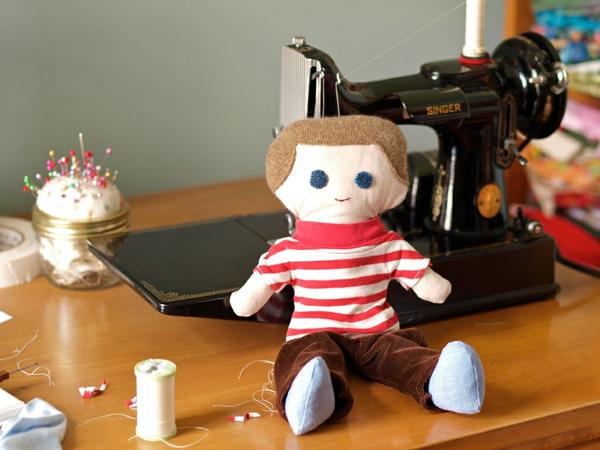
I have taken a bunch of quilting workshops over the years. Mostly retired women show up with their fancy Berninas and Husqvarnas, and every rotary tool yet invented. The instructors were often female, but there were some high profile men who were in demand as well. John Flynn is still piecing double wedding rings that have the precision of a civil
engineer, which he is.
Usually as the instructor walked around telling women to get their fabrics out, one or two would cry out in alarm.
"My machine suddenly won't work!"
The teacher would saunter by and flick the bobbin winder in place and it would magically be fixed. This is because clever designers made it even easier to fill a bobbin by automatically stopping the main motor when the bobbin is set to
fill.
"Thanks, I forgot," the woman would sheepishly say. Every class someone would make the same mistake.
I teach sewing to children and before they arrive I wake up all the machines and make sure they are adjusted and happy. I smile at them and tell them they are beautiful. Then a five year old starts sewing and the tension abruptly goes haywire.
"This machine is broken!" I hear the accusation. It takes a moment
of composure not to become defensive of my machines, whom I have named.
"Broken? Really? Bernie was working just fine a moment ago..." I slide into her chair and notice that the threading came unhitched. "Remember to check how it is threaded, girls. The little arrows remind you where it should go."
I wish people could learn to take responsibility for the problem, instead of hurling it in the direction of a
defenseless Bernina.
"I must be doing something wrong. Can you show me? Surely the sewing machine is trying her best, and considering the fabulous quilts she has produced her best is terrific."
People sometimes accuse their spouses of being broken.
"He won't talk." I have heard that more than once. Then I find a chance to listen to him or her alone and the words come reeling without pause. Feelings,
memories, fears come easily as the person unwinds.
Interruptions have a way of increasing the tension, as does blaming. Why are we surprised?
Some people have a design feature that disengages speech when they feel threatened. Years ago, I was still resentful of the time John spent singing with the barbershop guys. I could just barely tolerate that he was having fun every Tuesday night when I was wrestling little kids to bed. One morning I
asked him about it.
"How was barbershop last night?" I spoke tersely.
Silence.
"Well?"
"If I say I had fun, you will be mad. If I say I did not have fun then you will be mad for other reasons."
Which is true.
I am learning to put away the sharp implements when talking to John.